August 2, 2024, 4 p.m.
Rockwell City Public Library
424 Main Street
Rockwell City, IA
September 11, 2024, Noon
Friends of American Writers
at the Fortnightly
120 East Bellevue Place
Chicago, IL
(Reservations required.)
September 11, 2024, 7 p.m. *
The Book Cellar
4736-38 N. Lincoln Ave.
Chicago, IL
September 20, 2024, 1 p.m. *
Flossmoor Book Club
Flossmoor Community Church
2218 Hutchinson Road
Flossmoor, IL
November 6, 2024, 7 p.m.
Riverside Public Library
1 Burling Road
Riverside, IL
*In conjunction with novelist Connie Hampton Connally, author of Fire Music.
Author: rhgates
Recent Reviews
BUY ON AMAZONBUY ON BOOKSHOP.ORG
NUMBER 12 RUE SAINTE-CATHERINE
By Roberta Hartling Gates
IR RATING: 4.9
NUMBER 12 RUE SAINTE-CATHERINE, by Roberta Hartling Gates, is an impressive debut examining the life and times of a notorious Gestapo chief from his troubled childhood in Germany to his eventual arrest and trial decades later. Historical fiction at its finest.
IR Approved
A chilling portrait of an unremarkable man’s transformation into a monstrous perpetrator of evil under the Third Reich.
In NUMBER 12 RUE SAINTE-CATHERINE, Roberta Hartling Gates examines the life and times of Klaus Barbie, the notorious Gestapo Chief who terrorized Lyon, France at the height of World War II. Over the course of nine well-crafted short stories, Gates dives into the seductive allure of power, the corruption it invites, and the lasting damage it inflicts. From Barbie’s troubled childhood to his post-war escape and long-delayed legal reckoning, Gates paints a rather chilling portrait of an unremarkable man’s transformation into the infamous “Butcher of Lyon.”
The collection opens in 1920s Germany with “Mama’s Boy,” where readers learn that Barbie was “cursed with a father who was omnipresent.” Gates then outlines the early influences that shaped Barbie into the man he would become, tracing his abusive upbringing in the 1920s to his indoctrination into Nazism. From there, Gates thoroughly explores his ascent to Gestapo chief in Lyon, where he unleashed a ruthless campaign of terror, exemplified by the chilling 1943 raid on a Jewish welfare office (as outlined in “Number 12 Rue Sainte-Catherine”).
Through her use of vivid, often arresting prose, Gates brings Barbie’s victims and what they experienced to life. Particularly gut-wrenching is the story of Resistance leader Jean Moulin, who endured brutal torture at Barbie’s hands before succumbing to his injuries: “By that time, though, he was in the hands of that monster Klaus Barbie. They say it was Barbie himself who beat him to death, and I wouldn’t doubt it. Barbie was vicious, and he must have had some idea how important Moulin was. But Moulin had been tortured before. If he hadn’t given in then, he wasn’t going to give in to le boucher de Lyon.”
NUMBER 12 RUE SAINTE-CATHERINE also delves into Barbie’s post-war escape to Bolivia, where he lived comfortably under an assumed name until his long-delayed extradition and trial in France in the 1980s. While many of these stories focus on Barbie’s self-serving rationalizations, Gates also brings additional characters into the fold. For instance, the final story in this collection follows a middle-aged journalist who discovers the shocking truth about his mother’s wartime association with Klaus Barbie. The sudden identity crisis that follows is a fitting conclusion that illustrates the far-reaching and long-lasting impact of Barbie’s crimes.
While it’s impossible to know what Barbie was really thinking, Gates successfully offers some compelling hypothetical glimpses. “The Man Who Wore Violets,” for instance, provides insight into Klaus Barbie’s inner thoughts as he interrogates a female prisoner: “Klaus, caught off guard by the deftness of her strategy, barked out a laugh…Men were always saying what a mystery women were, but mostly they weren’t. Marianne, though, was different…She reminded him of a child clamoring to be picked up, but then wriggling to get away.”
Ultimately, NUMBER 12 RUE SAINTE-CATHERINE is a haunting and thought-provoking work that challenges readers to confront the darkest chapters of human history. At just over two hundred pages, this is a relatively quick read; but the concise nature of these tales feels appropriate, especially given the grim subject matter. Regardless, stories like these must be remembered. For that reason alone, NUMBER 12 RUE SAINTE-CATHERINE makes for an essential addition to any reader’s shelf.
NUMBER 12 RUE SAINTE-CATHERINE, by Roberta Hartling Gates, is an impressive debut examining the life and times of a notorious Gestapo chief from his troubled childhood in Germany to his eventual arrest and trial decades later. Historical fiction at its finest.
~James Weiskittel for IndieReader
Something Terrible in the Park
Pinyon, Number 28, Spring 2019.
Puffs of white clouds scooted across the blue sky as Lili, down on her knees, dug in the hard black of her garden. April is the cruelest month: she remembered that, but not much else, from her lit course in college. It had puzzled her then—How could springtime be cruel?—but now, at the age of forty-seven, she knew what the poet had meant. The pain she could manage in any other season devastated her in the spring, its regeneration a taunt she could hardly bear. It was obscene, that juxtaposition: robins and tulips on one side, her son’s death on the other.
She pushed impatiens into the ground, burying their tender roots in the chilly soil and tucking the dirt up around them. She marveled at impatiens—how bravely they bloomed, all season long. The first touch of frost in the fall and they were gone, but until then, so hopeful, so cheerful, so persistent. They didn’t know what was coming, she thought, feeling the damp sting of dirt on her hands, under her nails.
Working briskly, Lili started to transplant her alyssum, packing them into the earth, more closely than she should have because she hated to think of them stranded there, lonely and cold. Beside her, a primrose grew close to the ground, cupping pale yellow flowers in its basket of green. Quickly, she turned away. They were so beautiful. So ephemeral.
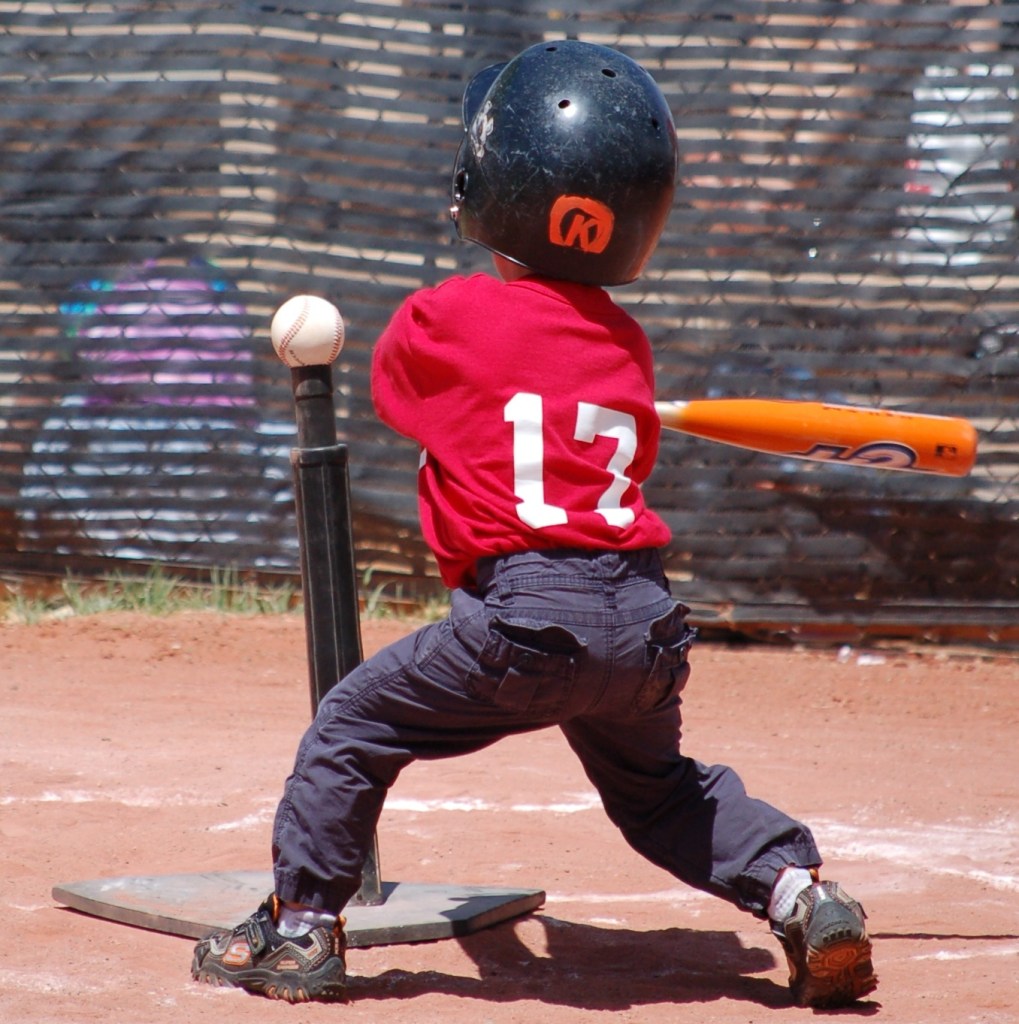
In the distance, Rick Davis’s Little League team was practicing in the park. Above the children’s voices, as thin and high-pitched as birds’, she could hear him yelling: Good swing, Nice going, Keep your eye on the ball. He made it sound simple, as if everything was basic and obvious, just a matter of staying alert. And now, this business about the parade, he was making that sound obvious too. She couldn’t understand him, how someone who had been Andy’s coach, who had been there when it happened, could treat them this way.
Lili glanced at her watch and saw that it was almost five, time to start dinner. Wayne, her husband, insisted that a routine was helpful. It was important to get up at seven, to go to bed at ten-thirty, to eat at six, because then, after a while, you didn’t have to remember, these things just happened by themselves. But that was only an illusion, the idea that pathetic little rituals add up to a life.
Slowly she gathered up her tools and put them in her basket. On the patio, though, she slumped into a lawn chair, unable to make herself go into the house. The chair’s wooden frame creaked resisting her weight and the cushions felt slightly damp, but Lili welcomed it. Comfort was an insult to her now.
Sitting there, her arms, even her fingers, too heavy to lift, she could hear the commuter trains coming and going, their accompanying whistles low and sad. Vaguely, she remembered the trains they’d ridden when on vacation in Eastern Europe. There had been toothless old women standing alongside the tracks selling peach juice or hard-boiled eggs or little baskets of jewel-like berries. They had been so lovely, those berries. It bothered her that she’d never found out their name.
As the light faded from the sky, the grass seemed to absorb it, becoming so intensely green she could hardly bear to look at it. Why is it that things are always brightest just before they disappear? she wondered. Andy had been such a happy boy—smart, eager, a champion. Wayne had seen to that with a seamless rotation of soccer, basketball, baseball. It had never occurred to her to worry about baseball. Football, yes—children sometimes broke bones playing football—but baseball? It had seemed as harmless as Sunday school.
Once, Lili had loved those Saturday morning games: sipping from her thermos of coffee and chatting with neighbors while watching Andy out of the corner of her eye. Even now she could see him, squatting importantly behind home plate in his catcher’s regalia, bouncing up and down on his heels, watching Rick closely, an acolyte with his priest. Andy had explained the signals to her once: One finger pointing down was a knuckle ball, two, a fastball. There were other signals too, but she hadn’t paid attention.
Andy had died last year on the opening day of the season when he was hit by a 1996 pale blue Chrysler that had careened out of nowhere into the ballpark where he was playing. It was his second year of Little League, and his team was leading six to four. Though it had been cool earlier in the day, it was warm in the sun, so warm that Lili took off her hoodie. It was then, just as she was wrapping it around her waist, that the monster-car—huge, uncontrollable—raced onto the field, tossing bodies aside as if they were rags, charging at Andy in his catcher’s position, killing him, killing four other children.
***
After the accident, the ministers from their church had arrived to comfort Wayne and Lili. The senior pastor, with his soft eyes and Santa Claus beard, had looked away, embarrassed, but the junior pastor—a much younger man in tight-fitting pants—spoke of God’s mysterious ways, as if what happened might actually have a purpose.
When it was time for church the next day, she and Wayne went, standing in the narthex after the service as if in a trance while the congregation filed past—So sorry, A special boy, So sad for you—and all the other soft, sibilant sounds that people consider soothing. But Lili wasn’t soothed. She felt as if she were being hissed at. She knew what they were thinking: Better yours than mine. Even Rick and Sharon had been uneasy, eager to get away, to go home and hug their kids close.
Sitting in church that Sunday morning, with the sun splashing crimson and blue through the stained glass windows, she’d heard the minister say that God was the first to cry in a tragedy like this one. She had overlooked it then, but something about the statement kept working its way forward in her brain. Was it true? Did God cry? Just last week she’d read about a woman who had stuffed her newborn baby in a freezer; the paramedics had found it only by chance. And what about that gangly boy from up the street who was always nursing small animals—a bird with a broken wing, a squirrel run over in the street? Did God care about those children? And if so, why did they have to suffer?
***
From the front of the house, a car door slammed—her husband, Wayne—but she didn’t move, not even when he called her name.
Last night he had brought home some strawberries, and they were just finishing them when he broached the subject of the opening day parade. He said Rick and the rest of the committee wanted Wayne to be the parade marshal. “Well, actually, both of us,” he said. “They want both of us to be marshals.”
“What did you say?” she asked, staring into her coffee cup.
“I said I’d think about it. I said we’d both think about it.”
That night, as they lay moored on opposite sides of their big bed, Wayne rolled onto his side to look at her. She could feel a slight emanation of warmth from his body. “Rick says they thought about canceling the parade,” he said. “A lot of people even wanted to cancel the season. But that’s not fair to the kids. Why should they miss out just because something terrible happened in the park last year?” His voice was calm and reasonable.
“All right, all right, that’s fine,” she said. “I just don’t see why we have to be involved.”
***
The first of May had been chilly last year, too chilly for opening day, but then the sun had come out, reminding everyone how lucky they were to live in a suburb that was so wholesome and safe, where the worst thing you ever heard about was a raccoon messing with somebody’s garbage.
The parade had stepped off exactly at noon: the high school band, stiff in their blue-and-gold uniforms, little girls in white gloves and tutus doing cartwheels in the street, Mayor Kemp and his wife in the marshal’s convertible. And then there were the floats, one for each team: the Braves on a flat bed truck with a teepee; the Tigers in yellow slickers streaked with black; and the Pirates, Andy’s team, in a boat drawn by a pickup, with a pirate flag snapping in the breeze. Andy, Lili later recalled, had been leaning far off the float, tossing candy to a toddler.
She and Debbie Perkins had stood next to the curb taking pictures as the boat drifted by, laughing a little at themselves for being so Mommy-ish. Debbie’s boy was dead too, but she had another child—a girl with strawberry blonde hair who played basketball. Lili felt guilty thinking that way—how could one child replace another?—but it was still someone to buy birthday presents for, to send to the dentist, to nag about homework. Someone, in other words, to live for. Why hadn’t she and Wayne had more children? A spare child just in case?
***
From inside the house, she could hear their landline ringing, harsh and demanding. People knew not to call when Lili was the only one home because she never answered. But Wayne always did. “What if it’s important?” he’d say and then reach for it.
But how could it be important? Was God, still crying in heaven, going to call them and say it was all a mistake, that Andy was really alive and coming back to them? She’d asked Wayne that once, and he’d looked at her blankly, as if he must have misheard her.
Ever since the accident, husband and wife—ex-father and ex-mother—had avoided each other politely. Occasionally, during the day, when Wayne was at work, a flicker of something—she presumed it was passion—would spike through her, but then, when he was actually there, she blockaded herself on her side of their vast king-sized bed. And he did the same.
But recently she’d sensed something new in him: an occasional gaze, or small odd gifts that puzzled her: a blue jay’s feather or a tiny tart hardly larger than a half dollar or an antique thimble that came from a house sale. Once he even brought her a small handmade book.
“The artist made the paper herself,” Wayne said as Lili turned the blank pages, which were pulpy and thick.
“But what would I do with it?” she asked, perplexed.
“You could write down your thoughts in it. You know, like you used to do when we went on trips.”
Lili kept the book, thinking that someday she might write something in it, but that day never came and now she didn’t even know where the book was.
***
They had buried Andy in his baseball jersey and cap, which were black, the Pirates’ color. It had been Wayne’s idea and she hadn’t resisted. What is an eight-year-old supposed to be buried in? But why couldn’t the color have been light blue or green, or even maroon like the other teams had? Anything would have been better than black.
Lili could still see Andy’s pale, crumpled body on the field—lifeless, limp, but otherwise fine, with only a thin trickle of blood zigzagging out of the corner of his mouth. Wayne had picked him up—you shouldn’t pick up a person who’s been injured, everybody knows that, but he’d done it anyway—and run with him to a man in the crowd wearing Bermuda shorts who seemed to shrink away, palms out, the closer Wayne got. A doctor, a dermatologist actually. But it wouldn’t have mattered, he could have been Jesus Christ himself—it wouldn’t have helped. Andy was dead. And she saw Wayne again, stumbling across the field, his shirttail flapping, the small rubbery body slipping sideways in his arms. Overhead, the sky was a bright and brutal blue.
***
“Oh, there you are,” said Wayne, pushing his way out the back door. “Why didn’t you answer me?”
She looked at him. His forehead was corrugated and old-looking. “I don’t know,” she said.
He knelt in front of her and for a second she thought he might try to touch her, but the moment passed and he merely said, “Why don’t you come inside and keep me company? I’m making spaghetti.”
Lili stared at him—at his glasses and thinning hair, at the tie he was wearing. It was a dark blue tie with small red dots that looked like currants.
***
In Hungary they had eaten berries even smaller than currants but incredibly sweet and as red as rubies. Once, craving them, Lili had gotten off their train to buy a basket of them from a shrunken old woman in a babushka. The exchange went on for long, arduous minutes, and when she turned the train had already begun to roll out of the station. Wayne leaned over the platform in back and waved to her, half on and half off, as he extended his arms. “Jump, Lili, jump,” he yelled, and she had, berries scattering like beads on the gleaming ribbons of track.
***
In the growing darkness, she turned to her husband. “Remember how he always sang?” she asked.
Wayne dropped into the lawn chair beside her. “Sure,” he said.
“In the bathroom? In the tub? All those little songs from school. And then things of his own that he made up.”
“The Itsy Bitsy Spider,’ I remember that,” Wayne said.
“Yes, right,” said Lili, turning toward him with a smile. “And ‘Summer in the City’—remember how he memorized it, jackhammer sounds and all?”
Wayne nodded.
Lili looked away. “I always thought he might grow up and be on the stage,” she said. “You know, a comedian or something. He was always such a ham.”
Wayne looked at her. “You’re kidding?” he said. “I always thought of him as—I don’t know, Ryne Sandberg, somebody like that.”
Baseball, she thought. “That was Rick on the phone, wasn’t it?”
He nodded. “The parade is only a week away. He needs to know.” High above them, a jet plane crossed the pale sky like a blip on a screen, its contrail fading little by little. “If I do it,” Wayne asked, “will you do it with me?”
She gazed at him. He was the father, but he could have been a stranger in a store, a person she’d pass on the street without noticing. “Why do you even want to?” she asked.
“Lili, c’mon. They just want to be nice, that’s all.”
“No. No, they don’t want to be nice. They just want us to forget, to pretend that it never happened. They want to erase him, like he never was. Our baby. Andy.”
Wayne studied her for a moment. He seemed calm, strange, an enemy. “They want us to go on, Lili.” He paused. “I want us to go on.”
She looked at her husband’s long familiar face and saw the train again—his body leaning away from it, his arms long and outstretched, golden in the sun, reaching, ready to scoop her up.
“You could do it,” he was saying, and she looked at him, her heart lurching inside its basket of ribs. “I’d be there. We could do it. Together, we could do it.”
In the growing twilight, his glasses caught a last flicker of sunlight, and for a moment she longed to give in, to yield, to take that leap, but then she sensed his hand moving toward hers. No. She shrank from him. No, not if it meant forgetting Andy. Not if it meant that.
***
And she watched, impassive, as the glimmering tracks pulled the train, and her husband’s arms, and their life together, farther and farther away, until, at last, they were tucked into the seam at the edge of the earth.
Beneath her, cinders stung the soles of her feet. Above her, the sky curved empty and blue. She was alone now, a shrunken old woman wearing a babushka and clutching strange fruit to her bosom.
– The End –
Little Black Dress
Dogwood: A Journal of Poetry and Prose, Vol. 20, Spring 2021.

Three days before the big New Year’s Eve party that will usher in 1968, Hal’s mother leads Donna up the stairs of her lavish house. And Donna, though she tries to be nonchalant, can’t help being impressed by everything she sees: the celadon walls, the brightly polished sconces, the oriental runner that’s anchored by long brass rods at the back of every step. She’s been dating Hal, a law student, since the end of October and this is the way she imagined his house would look: elegant and restrained with none of the cheesy knick-knacks that clutter up her parents’ house in Mt. Greenwood.
At the top of the stairs, Hal’s mother pauses and gestures toward an open doorway. She is as elegant as her house, from her neat hips and dainty profile, to the plume of smoke spiraling from her cigarette. “This is your room,” she says. “I hope you’ll be comfortable.”
Donna peers into the room, which is beautifully blank, the walls a quiet shade of gray, the canopy bed as high and white as a very tall wedding cake. “Thank you, Mrs. Burwell, it’s lovely.”
But Hal’s mother is quick to correct her. “No. Call me Phoebe, please,” she says in a tone that’s more neutral than friendly. Then, waving her cigarette in the direction of Donna’s bell-bottomed jeans, she adds, “Oh, and by the way, we dress for dinner.”
Donna glances down at herself but before she can say anything, Phoebe is on her way downstairs. Stunned, Donna creeps into the bedroom feeling more like a trespasser than a guest. When Hal invited her for the weekend, she’d been nervous about meeting his parents. This was Lake Forest after all, where the per capita income is probably four times what her father brings home as a Chicago cop. But Hal had pooh-poohed her fears. “Don’t worry,” he said, “they’ll like you just as much as I do.” But now, only twenty minutes after arriving, she’s doubtful.
She finds her suitcase which Hal brought up earlier and starts rummaging through it, pulling out some of the smaller items as she goes: her bras and panties, the Chanel No. 5 that her brother gave her for Christmas, a couple of letters from Phil that she still needs to answer. When she gets to her new dress, though, she pauses.
Carefully, almost reverently, she lifts it out of the tissue paper and studies it, wondering what Hal will think of it. He told her the party on New Year’s Eve was a big deal and that she should wear something “tasteful but sexy” so that he could show her off.
Donna has no desire to be shown off (blending in is more what she’s after), but Hal is her first real boyfriend so she’d done her best to meet his requirements without going overboard. She started by searching the dress shops close to campus, but anything made of silk was out of her price range and she hated polyester (too stiff and cheap-looking), so she finally opted to make the dress herself. It was a simple pattern: a little slip dress that skimmed the body rather than clinging to it. The only problem had been the spaghetti straps, which made wearing a bra pretty much impossible. But Donna solved that difficulty by deciding to skip one altogether. She wasn’t exactly what you’d call busty, and besides there were plenty of girls who had stopped wearing bras, especially if they were into the hippie look.
At home, when she’d tried it on, the dress had seemed perfect, but now, hanging it up on one of Phoebe’s padded hangers, she’s not so certain. What she’d had in mind was one of Audrey Hepburn’s little black dresses from Breakfast at Tiffany’s, but of course there’s no comparison. Audrey Hepburn’s dresses had been custom-made by Hollywood designers, not run up on a Singer sewing machine in the basement of a Mt. Greenwood bungalow.
Sighing, Donna returns to her suitcase and digs through it some more, eventually coming up with a dinner-worthy gray skirt (short, but not really a mini), a pair of matching tights and a plain white blouse, which, together, make her look more like a fourteen-year-old Catholic schoolgirl than an eighteen-year-old coed. But maybe that’s good, she thinks, glancing at herself in the mirror. At least no one will be able to accuse her of putting on airs or trying to look seductive.
She opens the door, ready to run downstairs, then stops, remembering suddenly that she’s a guest in this house. It’s always possible that someone might wander in, and if it were Phoebe, well . . . Quickly Donna shoves her underwear into a drawer, then tucks the letters from Phil underneath. Phil is more of a pen pal than anything else, so his letters aren’t exactly contraband, but all the same she wouldn’t want to have them discovered. They’re just too intense. Even the first one was like that, so compelling and almost pushy that she couldn’t refuse.
***
I don’t know if you remember me but I used to hang out with your brother Tom a lot. Part of the reason was because I had a big crush on you. You probably didn’t know that but now that I’m 10,000 miles away in Vietnam I’d like you to. I know you must be busy now that you’re in college but if you ever get the chance I’d love to hear from you.
***
When Donna comes down the stairs, she finds Hal at the bottom of them, looking like an H&R Block tax preparer in his white shirt and striped tie. “C’mere,” he says, catching her hand and leading her into a book-lined room off the living room. “I want you to meet Dad.”
Hal’s father, ensconced in the lap of a massive wing chair, folds up his newspaper and gets to his feet as soon as he sees her. “So this is the young lady,” he says, his smile huge, so huge it must be genuine. Donna, smiling back and offering her hand, is amazed at how much the two men resemble each other. The father—another Harold, it turns out—is thicker and fleshier, but his sagging face is still quite handsome.
He picks up a cut-glass tumbler holding something amber-colored and rattles the ice cubes. “Hal tells me you’re on scholarship, a full ride,” he says, and Donna nods. It embarrasses her to have people talk about this, as if she’s some sort of charity case, but Hal’s father seems impressed.
“Hey, pretty and smart both,” he says, lifting his glass to her and glancing briefly at her legs. “You can’t do better than that.”
You know what I love about your letters, Donna? It’s the way they’re so detailed. Like when you wrote and told me all about your lit class and how much you like Emily Dickinson, that was great. Even the ordinary things you do are interesting, like going to the record store and listening to a Laura Nyro album or having burgers at Joe’s Place. Actually I like hearing about everything you do because it helps me to imagine you better. It makes me feel like I’m there with you.
Coming home from a movie the next night, Donna watches as snowflakes spiral into the windshield of Hal’s car. The sight of them, gauzy and buoyant, makes her feel dizzy, even a bit high, though it’s a natural sort of high.
She starts to sing: “Su-zy, Suzy Snowflake, look at her tumbling down,” then giggles because the song is so silly.
Hal laughs. He is in a good mood. “What, Garfield Goose?”
Donna is surprised. “You didn’t actually watch that show, did you?” she asks as he turns into the long lane leading to the Burwells’ garage, which is an old stable that’s been converted.
“Sure, didn’t everybody?”
“Not my brother,” says Donna. “He thought it was too stupid for words.”
“Well, that’s an older brother for you,” Hal says. He pulls into the garage and cuts the engine but makes no move to get out of the car.
“I guess,” she says, “except most of the time he acts more like my father than my brother.” She laughs a little, then adds, “But what can you do, he’s practically a clone of Dad.”
“So he’s a policeman too?”
“Well, he wants to be. He’s at the Academy.”
“Hmm,” says Hal, twisting a piece of her hair around his finger. “I hope that doesn’t mean he’ll be making you go out with a whole lot of brother officers.”
“Well, he might,” she says, only half-joking. “He’s sort of like that anyway.”
Hal seems surprised by this. “You mean he’d tell you who you should date? He’d actually do that?”
“Well, no, not directly,” says Donna. “But he has a lot of opinions, let’s put it that way.”
Hal considers this. “And what is his opinion of me?” he asks, unwinding the piece of hair he’s been playing with.
Donna has no idea how to respond to this. She knows that her brother is leery of Hal—he doesn’t like lawyers just on principle and he thinks four years is too big an age gap—but those are external things. They’re not really the things that count.
“Well, you have to understand Tom,” she says finally. “I mean, I love him and everything, but he can be pretty old-fashioned.”
“Meaning what?”
“Meaning if he had his way, I’d only date guys from the neighborhood. Known quantities, more or less.”
This is true, it’s how Tom thinks. What he tends to forget, though, is that nobody from the neighborhood was ever that interested in dating her. Yes, she’d had a date for the prom (a cousin of hers who took her just to be nice), and there had been a couple of other boys, too—boys that she’d dated once or twice but were every bit as backward as she was. Her mother always said it was because she was smart, that she should just be patient and wait because once she got to college things would change. But Donna, who’d always been shy, thought she was doomed. So when Hal appeared out of the blue in the periodicals reading room, she was amazed. It didn’t seem possible that someone who wanted to date her would also be someone she wanted to date.
“But there’s nobody like that now, is there?” asks Hal.
“Like who?”
“I don’t know. An old boyfriend maybe? Somebody you used to go out with?”
She shakes her head, noticing suddenly how cold her feet are. “No. Nobody like that.”
But Hal seems unconvinced. “You’re sure?” he asks, and for a single irrational moment she thinks about Phil. But Phil’s different. He’s in Vietnam and a buddy of her brother’s. If she writes to him, it’s only because he’s in danger and she can’t help worrying about him.
“Did somebody say something? Because if they did—”
“No, of course not. It’s just that . . . well, I wondered, that’s all.”
Donna is baffled. She can’t imagine why Hal is so suspicious. “I don’t know what you’re worried about,” she says, “but you don’t need to be. Except for you, I’ve never even been in a relationship.”
As soon as the words are out of her mouth, though, she’s sorry. One look at his face is enough to convince her that, however she meant it (as a token of trust?), he’s not taking it that way.
“Really?” he asks. “I’m your first boyfriend? That’s what you’re saying?”
Donna can feel her face heating up. “Well, no, not exactly,” she stammers. “There were a couple of other boys, but they were”—she shrugs her shoulders—“well, it was pretty platonic.”
“But you’d been kissed before, right?”
She laughs weakly. “Yeah, sure.”
“And that’s about it?”
“Yes.”
For a moment, Hal is quiet. “Well, actually, that explains a lot,” he says, staring at the garden tools hanging on the garage wall in front of them.
There’s a long silence and eventually Donna, against her better judgment, asks him what he means.
“It’s just that everything is always so shocking to you,” he says. “French kissing even. I could never figure it out.”
Donna hangs her head as his verdict sinks in. She’s tried to be blasé, willing, whatever she thought would please him, but he’s right, she had been shocked the first time he removed her bra, or put her hand on him when he was hard, or slipped his fingers inside her panties. She likes their secret intimacy and how it draws a tight circle around them, but she never feels wholly herself when it’s happening. Everything is so disorienting then, like trying to learn the rules to a game when you’re playing it for the first time. But of course it’s her fault too. If she were more experienced, more sexually mature—more like other girls!—she’d know what to expect. She wouldn’t have to be so “shocked,” as he put it.
She lifts her head, risking a quick look at him. “Hal, I’m sorry. Really, I am,” she says, but then her voice breaks and she stops.
“Oh, for Christ’s sake,” he says. “You’re not going to cry, are you? Not about something like that?”
But Donna, hearing the irritation in his voice, hides her face in her hands and cries that much harder. A moment later, though, he relents, reaching out for her and pulling her into his shoulder.
“You’re crazy, you know that, Donna? I mean, what do you think? That I want a girl who’s been around the block a hundred times?” He kisses the top of her head. “No, of course not. I want someone like you. Someone sweet and unspoiled.”
For a fleeting moment, Donna wonders if what he actually means is naïve and malleable—a girl he can boss around and mold to his liking—but then he is kissing her, his tongue inside her mouth, and the thought melts away as she surrenders to the soft urgent coaxing of his mouth.
You want to know the first time I noticed you? Really noticed you? I think I was around 15 so you must have been about 12. It was in the summer, a really hot day. Your grandma was over and she was out in the yard hanging up some clothes. But then for some reason she got scared. I don’t know why. A bumblebee maybe. She was practically hysterical though, running all around with her apron up over her head. Tom and I just stood there. We didn’t know what to do. But you came out of the house with a glass of water and took charge. You got her to calm down, take a sip of the water. Then you sat with her awhile on that old glider of yours. You talked to her so quiet. It was almost like singing. Sort of the way you’d sing to a baby.
You were just a skinny little kid then. But I noticed you all right. It’s when I started to think of you as special. And you’re even more special now . . .
The New Year’s Eve party is hosted by a girl named Heather, who has high sharp cheekbones and a neck so long it seems almost springy, like one of those bobble-headed dolls. “Hey, Hal, look at you,” she gushes as they arrive, then kisses him flat on the lips. She gives Donna a quick peck. “Watch out for this one,” she says, indicating Hal with a quick flutter of bracelets.
Hal sweeps Donna through the house—a house even larger than his—and it’s clear that everyone knows everyone else. They all went to school together. Their parents are friends. They are a tribe, sharing the same rituals, the same language. Donna pastes on a smile and tries to remember the names coming at her. John, an MBA student at the University of Chicago. Sandra, his date, who goes to Wellesley and wears a tight silvery dress that makes her look like a mermaid. Bonnie—or is it Bunny?—a tall, tennis-y girl with a faint mustache and a bored expression. And Scott, a medical student at Rush who actually smiles at her.
Hal guides her around the dining room table, loading up her plate with delicacies: thick glossy shrimp with their little pink fans, rosy slices of roast beef, stuffed mushrooms smelling of garlic, chocolate truffles in silvery paper.
Halfway around, though, he stops in front of a tray of cucumber slices decorated with cream cheese and bits of pimento. “Here, open up,” he says, thrusting a slice into her mouth. And suddenly, out of nowhere, she wonders if Phil ever has a chance to take communion, if there’s a priest with them out there in the jungle, just in case.
It’s sort of funny the way you get used to things over here. Waking up in a hole for instance. After awhile it seems normal. You even get used to the leeches. They can attach in some pretty private places (if you know what I mean). We tuck our pants into our boots and cinch up our belts as tight as we can but in the morning there they are, black slimy things about 2 in. long. You can yank them off but they’ve got some sort of spit that thins the blood so you’ll bleed for a long time if you do. Lt. Graham showed us how the Vietnamese do it. You take some salt and put it in a piece of cloth and then wet the cloth and apply it. After awhile the leech just falls off. But it can take a long time. I’m generally not that patient. You wake up and you just want those mother-suckers (joke!) off you.
A couple of hours later, Donna finds herself drifting back into the dining room where Hal and his buddies are huddled around the bar. So far he’s danced with her only twice, and she can’t help wondering why he even bothered to bring her.
She is standing there, staring bleakly at the table with its tall candles and tasteful arrangement of greens, when Sandra, the girl in the mermaid dress, glides up beside her. She is tall, much taller than Donna, and wears carmine-colored lipstick that makes her look like a movie star. She picks up one of the chubby stuffed mushrooms and slips it into her mouth.
“By the way, I love your dress,” she tells Donna. “It reminds me of Holly Golightly. You know, that movie with Audrey Hepburn.”
Donna, buoyed by her comment, is happy to return the compliment. “I love yours, too. It’s really gorgeous, the way it sparkles.”
Sandra glances down at herself, as if knowing how fantastic her dress is, then launches into the story of its purchase. What happened was, she’d been shopping for Christmas presents, looking for a scarf for her mother, or maybe a blouse, when she saw this dress, which just happened to be in her size, and so . . .
Donna nods, trying to look interested when, out of the corner of her eye, she notices that Hal has disappeared. Where? she wonders, feeling vaguely uneasy.
“And what about yours?” Sandra says finally, having come to the end of her story.
“Mine?”
Sandra nods in the direction of Donna’s dress. “Yeah, where did you find a dress like that? I’d love to know.”
Donna stands there blankly, not wanting to say that she made it herself.
“It’s not a secret, is it?” asks Sandra. “Some little shop on Oak Street you don’t want me to know about?”
Donna shakes her head, ready to say that the dress came from Field’s—she knows they sell nice things there—when Sandra’s date swoops down on her. “Hey, enough feeding your face,” he says. “We need to dance.”
Sandra, laughing as she’s led away, gives Donna a small wave. “I’ll make you tell me later,” she says, disappearing into the next room.
I think I’ve been telling you too much about what it’s like to be over here. Like what happened to McNally when he stepped on that mine, I never should’ve told you about that. You didn’t need to know the details. But something happens when I write to you. I start out answering your questions and it’s like I can’t stop. I don’t even know what I’m going to say until I’ve written it down. Writing to you is my therapy, I guess, a way of putting things in perspective. Without you, I don’t think I’d know how I felt about anything. That’s how essential you are to me.
“You look lonely,” says a voice beside Donna, who jumps, nearly overturning her plate of Swedish meatballs. But then she sees it’s the med student—what was his name, Scott?—and relaxes, remembering his smile from the introductions.
He hands her a glass of champagne and asks what she thinks of the party. “On a scale of one to ten, what would you give it?”
“Right now, right this minute?” she asks and he nods. “Oh, I don’t know, a six or a seven maybe.”
“Really?”
“Okay, a four or a five.”
He grins. “How about a two-and-a-half? That’s what I’d give it.” She looks at him in surprise and he explains. “Heather’s been having these New Year’s Eve parties since, I don’t know, the Middle Ages at least, and nothing ever changes. Some of the girls even wear the same dresses. Like that girl over there, the one by the piano who’s wearing a dress that looks like it’s made out of gum wrappers.”
“You mean Sandra?” says Donna, and he nods.
“Every year, the same dress—”
“But she told me she bought it this Christmas.”
“I swear,” he says, holding up his palm like a Boy Scout. “Every year, the same tinfoil dress.”
Donna senses then that he’s joking and laughs, realizing that for the first time tonight she is actually having fun. He finishes the rest of his drink and gives her a lingering look.
“Hey, dance with me, will you?” he asks. When she hesitates, he adds, “Hal won’t mind, will he?”
She looks up at him and laughs. “I don’t even know where he is,” she says and follows him onto the parquet floor.
By now I’ve told everybody in the squad about you. Maybe even the whole platoon. I’ve sort of lost track. And they all say the same thing, that I’m incredibly lucky to have a girl who’s so pretty and sweet and also faithful. A lot of guys out here have gotten Dear John letters. And not just the single guys either. Some of the married ones too. You feel real bad for them. A guy who gets that kind of letter loses it. Can’t sleep, can’t concentrate, forgets to look where he’s walking.
When they get back from the party, Hal makes a fire in the den, and Donna, feeling drowsy and contented—a little tipsy actually—watches as the flames take root, pretending to herself that this is her house, her fireplace, her beautiful sofa. She even kicks off her shoes and tucks her feet underneath her. It’s a defiant act, something that would pain Phoebe if she were here. She’s not, though, because she and Hal’s father are at a party of their own.
Hal sits down beside her with a bottle of red wine in one hand and a pair of wine glasses in the other. “I was watching you at the party,” he says. “It looked like you and Scott were having a good time.”
“Yeah, I guess,” she says, having heard the accusation in his voice. He starts to pour her some wine, but she shakes her head. “No, none for me.”
But Hal pours her some anyway. “I guess the two of you had a lot to say to each other.”
“No, not really. Just party talk, that’s all.”
Hal downs his glass and pours another. “You were dancing with him, too.”
She shrugs, wondering how much he’s had to drink. “There’s no law against that, is there?”
“You even had your hand on his neck. I saw you.”
Donna stares at him, incredulous. “Well, what do you expect, Hal? If you’d hung around instead of going off wherever it was that you went, I wouldn’t have been dancing with Scott. I probably wouldn’t even have talked to him.”
Donna, who’s surprised by this outburst, can see that Hal is too. For several long moments, he scrutinizes her, his face so close to hers that she actually feels the heat of his anger. She braces herself for something sarcastic or cutting, but then, unexpectedly, he relaxes. “You’re right, I’m overreacting,” he says. “Scott’s harmless.”
Donna doesn’t answer but manages a smile. She doesn’t want to fight. Not on New Year’s Eve. Not in his beautiful house.
He puts an arm around her and pulls her toward him. Grateful, she nestles into the well of his shoulder and closes her eyes. He smells good: a mixture of alcohol and English Leather cologne, along with something fainter that must be the smell of sweat. She lifts her head, offering him her mouth and he starts to kiss her, small darting kisses that tingle like snowflakes.
But then she pulls away: “Wait, Hal, when are your parents coming home?”
“Don’t worry,” he says. “It’s New Year’s Eve. They won’t be home for another hour or two. It gives us plenty of time.”
Suddenly she feels weightless. “What do you mean, plenty of time?”
He lifts the curtain of her hair and kisses the rim of her ear. “I mean, here we are on New Year’s Eve, just the two of us, and upstairs there’s a very nice guest room, the one you’re staying in actually.” He pauses for a moment, his tongue in the hollow of her ear, then adds: “So why don’t you just go up there and wait for your guest.”
“No,” she says as a cold sick dread spreads through her. “No, it’s too big a step. I couldn’t—”
“Sure, you can,” he says, taking one of her hands. “Just say yes, and the rest will be easy.”
She stares at her hand, mute and white, like a little mouse trapped inside his, and shudders. So this is where her neediness has led her. She had thought that he wanted to show her off to his friends. To have his parents meet her. To spend uninterrupted time with her. But now she wonders: was it only a strategy, a way of arriving at this moment?
“I know it’s your first time,” he says, his tone so earnest it sounds like something from a movie. “But I won’t hurt you, I promise. I’ll go in slow. You’ll like it.”
“No,” she says, yanking her hand away. “I can’t. It’s too much.”
Beside her, Hal’s anger cracks open. “So what are you doing? Saving it for that guy in Nam?”
“What?”
“It’s that guy, isn’t it? Phil or whatever his name is, the one you write to all the time.”
Donna freezes. Everything around her stops. The fire stops crackling. The clock stops ticking. Even her breathing is suppressed. “How do you know about him?” she asks.
Hal snorts. “C’mon, you leave his letters all over.”
Donna is shocked. He has been in her room, he has looked through her things?
“Who is he anyway?” asks Hal. “Some dip-shit kid you went to high school with or what?”
“Well, sort of,” she says in a kind of daze. “Mostly, though, he’s a friend of Tom’s.”
Hal laughs scornfully. “Somebody from the neighborhood.”
Donna stares at the fire, pretending she hasn’t heard him.
“So what happened? Did he get drafted?”
“No, he enlisted.”
“Enlisted? You’re kidding? Who the hell enlists these days?”
Donna starts to tell him about Phil’s father, how he fought his way across France in the last war, but Hal interrupts her.
“What do you think this is, Donna—a war against Hitler? We’re not saving the world from Communism or anything else, we’re napalming a little country the size of Indiana right out of existence.”
She glares at him, outraged that he’s appropriating the liberal argument and using it against Phil as if he were the one who’d started this war. “Well, maybe you’re right, Hal. Maybe we shouldn’t be there. But I do know one thing: if it weren’t for Phil and a lot of other guys like him, you’d be the one out there sleeping in holes and hobbling around on rotten feet. You’d be the one waking up in the morning covered with leeches. You’d be—”
“So he’s a hero, is that it?”
Donna says nothing. A hero? She’s not even sure what that is.
“Okay, Donna, if that’s the way you feel,” he says, throwing her a tight, narrow look. “But when he’s touching you, think about the villages he’s burned and the babies he’s killed. Because no matter what you think, he’s no different, he’s not special. The dirt from this war is all over him.”
Donna stares back at him, her fury contracting to a hard sharp point. “You think you know everything, don’t you?” she says, so enraged she starts drumming on his chest with her fists. “I hate that about you. I hate it, hate it, hate it.” He laughs—it’s a game to him—and catches her by the wrists, squeezing them hard. Then, all of a sudden, his mouth is on hers and he’s pushing her backwards onto the couch. Gripping her shoulders, he kisses her neck and the tops of her breasts, his mouth voracious and big.
“Hal, don’t,” she pleads as he tugs on her dress. But it’s too late. The strap gives way and his tongue starts flickering over her nipple as if she had planned to bare her breast at that exact moment. She turns her face to the back of the sofa, feeling numb, almost as if she’d slipped outside herself and were watching from a distance. This isn’t happening. It can’t be.
But then she feels his hands under her skirt. “Hal, no, what are you doing?” she cries, but she knows what he is doing: he is pulling down her pantyhose. She tries to twist away, but he has her pinned down.
“Hey, relax, will you,” he says, grunting as he struggles with the pantyhose. His voice is light, teasing almost, but his breathing is heavy, like an animal’s.
She tries to sit up, to back herself into the corner, but it only gives him more leverage. One or two quick pulls and her pantyhose are gone, he’s tossed them onto the floor.
She thrashes against him, but he manages to wedge his hand between her clenched thighs.
“No, get off me,” she screams as panic seizes her and she starts to sob.
Then, without warning, light floods the room. It is Hal’s father, he’s switched on the overhead. “Well, well,” he says, surveying them with bleary eyes, “this is a pretty little scene.”
Hal leaps off Donna and she sits up, hastily clutching the top of her dress.
Mr. Burwell looks at them for another moment or two, then says: “Tell me, son, is there such a shortage of bedrooms in this house that you can’t find one in which to maul your little houseguest?”
“Dad. We were just talking.”
“I guess that’s why her tit was hanging out of her dress,” he says, loosening his tie and looking unsteadily in Donna’s direction. “Quite a pretty little tit, I might add.”
“Dad, for God’s sake,” she hears Hal saying, but she is gone, out of the room, running up the stairs, not looking back, not listening.
You are such a sweet girl, Donna, that I find myself caring more and more about you all the time. I am trying my hardest not to fall in love with you because I know you said we should wait. But I’m not sure how much longer I can hold out. It’s just there inside me, like a little seed, but I won’t let it grow unless you say it’s okay.
Donna sits on her suitcase at the end of the Burwells’ long lane, waiting for Tom to come get her. Huddled against the cold, too exhausted even to cry, she feels flattened, ashamed, worthless. She thought she could visit Hal in his world and fit in, but that was a joke. She was a joke: too trusting, too stupid, too out of her league to have any inkling of what could happen. And then, when it did, she wasn’t ready. She was helpless. The depth of her inadequacy fills her with a shame so pervasive and heavy it feels like paralysis. She tries to think ahead to tomorrow when she’ll wake up in her own bed, but comforting as that thought is, she knows it won’t change anything: she’ll still be the girl whose tit was hanging out of her dress.
It has started to snow, big idle flakes that fall as gently as feathers. Watching their leisurely descent, she thinks about Phil who keeps telling her how much he misses the snow now that he has to live in a hot steamy jungle. He is such a sweet guy, writing her two or three letters a week and always saying the nicest things in them. So nice in fact that they almost make up for the times in her life when she was ignored or passed over or not seen at all. It’s hard to fathom, but she could probably tell him anything and he’d be interested.
With Hal it was different. All he ever did was find fault. She was boring at parties and her clothes weren’t right and she wasn’t sexy enough and so on and so forth. But she never contradicted him because she thought he knew things that she didn’t. And she let him boss her around even when it came to little things, like her dress. He’d told her it should be “tasteful but sexy”—two things that are basically opposites—and like a fool she’d tried hard to give him what he wanted. But it doesn’t matter anymore, because even if she could repair the strap, she’d never want to wear— But here she stops, wondering if she even packed her dress. She tries to remember, but she was in such a hurry, throwing things into her bag one after the other, that she has no idea. But it’s not like it matters.
The snowfall is still very light, but a snowplow clanks by nevertheless, its orange light rotating as it momentarily fills the air with commotion. But then it moves on, leaving the street even quieter than it was before. Donna has never felt more alone. The houses, massive and a little sinister, are so dark they could be abandoned. It’s almost as if a silent army has swept through the neighborhood, extinguishing everyone but herself.
Donna stamps her feet just to make a little noise, then hears a car in the distance. She peers down the street, hoping for Tom’s VW Beetle but realizing, as soon as she sees the car’s shape, that it’s a Pontiac Firebird. Donna is generally not that good with makes or models, but she knows a Firebird when she sees one because it’s the car Phil has his heart set on. He’s saving up now so he can buy one as soon as Uncle Sam cuts him loose. He says it will be a reward for all those months he’s spent “humping the boonies.”
And is she also a reward? The question, darting into her head out of nowhere, cuts through her like an electrical charge. It’s as if something she’d understood only vaguely has suddenly taken on a solid shape. Because isn’t that what he’s been trying to tell her? Doesn’t he manage to work it into every letter he sends her? She feels a little guilty (shouldn’t she be pleased, or at least flattered?) but it’s not that simple, because even though Phil is nicer than Hal—a thousand times nicer—in one way he’s not that much different. If Hal wanted to change her, then Phil is counting on her to stay the same. And it’s too late for that. In his mind, she’s still Tom’s shy little sister, a girl who might be able to keep him alive if she just loves him enough. And, who knows, maybe she will fall in love with him, maybe it will be for keeps. But she’s different now. Not the timid little creature Hal always accused her of being, and certainly not the fantasy girl Phil thinks about just before falling asleep. But someone else, someone who’s still emerging. She doesn’t know who that will be, but for now she’s content to wait and see.
A light comes on in the Burwells’ house, and for a moment Donna panics, afraid that someone might see her. But then the light goes out. Just someone getting up to go to the bathroom, she thinks— And then it comes to her, where her dress is. It’s in the guest bathroom, hanging by its one remaining strap from a hook on the door. Fleetingly, she thinks about Phoebe and wonders how she’ll react when she finds it. It’s sure to be an ordeal for her, like opening up a drawer and finding the molted skin of a snake in with her undies.
Donna smiles at the thought—no, she doesn’t just smile, she decides to laugh. She looks around at the snow that’s still coming down. Layer by layer, it’s coating everything in its way—rooftops, tree limbs, even the tiniest of twigs—and transforming them into something soft and radiantly white. Donna doesn’t know how much longer she’ll have to sit here and wait, but she’s comfortable floating in this blank world where she’s at the center of something new and fresh and promising.
– The End –
Novel-in-Progress Excerpt
Rendez-vous at Caluire
CHAPTER 1 ~ JEAN MOULIN
Wednesday, November 11, 1942 – Lyon, France
Jean opened his eyes to early morning darkness and fumbled for the pack of cigarettes on his nightstand. It was shameful, being such a slave to tobacco that he couldn’t get out of bed without having a cigarette first, but what could he say? Smoking was the only extravagance he permitted himself (unless perhaps you counted Colette, which you really couldn’t). Besides, he was frugal in almost every other way: nothing but fifteen-franc lunches, suits so worn they would have disgraced a scarecrow, a single room hardly larger than a monk’s cell. Anyone who’d known him two years ago would have been dumbfounded by the meagerness of his current life, he reflected, drawing the smoke deep into his lungs for the first and only head rush of the day. He’d been a préfet then, an exalted servant of the state living in a préfecture surrounded by wrought iron and appearing at public events in a uniform with fringed epaulets. But that career had ended with the arrival of the Germans. Now he had a new job, which was organizing the fight against them—an assignment that had come straight from General de Gaulle himself.
A sudden rapping at the door interrupted his thoughts: one heavy knock, a beat, then two lighter knocks. Alain? he wondered, putting down his cigarette and pulling on his pants. Well, obviously, that was his knock, but why come so early? The rest of Jean’s day would be filled with a series of rendezvous, strategy meetings, arguments and complaints. Couldn’t he have just fifteen minutes to himself at the start of his day? Was that too much to ask? But apparently it was, since he had a secretary so afraid of being late that he almost always arrived early. There were worse things, Jean supposed, but as he padded across the room to open the door for Alain, he couldn’t think what they would be.
“Bonjour,” said Alain as soon as Jean opened the door, jumping inside so quickly that Jean had to take a step back. Alain was high-strung by nature, but he seemed unusually tense this morning.
“Are you all right?” Jean asked, taking a close look at the boy.
“Of course I’m all right,” answered Alain peevishly. “Why wouldn’t I be?”
Jean shrugged, deciding that if something was wrong it must be personal. Alain was so slight he always reminded Jean of an elf, but that didn’t preclude a love life. Some girl—Suzette perhaps—might have done him wrong. Suzette was useful in any number of ways, but she was a relentless flirt. She’d be quite capable of flustering someone like Alain, who’d lived a monastic life, first in Catholic boarding schools, then in Nissen huts while training with the Free French Forces in Hampshire, England. It was unlikely he’d ever even been alone with a girl, much less slept with one unless perhaps it was a putain.
“Well, sit down then and start reading me the papers,” Jean said, gesturing toward the table which stood by the window overlooking the Rhône. It was how they always started their day: with Alain reading the newspapers aloud while Jean shaved and dressed.
But Alain only shook his head. “Sorry, no papers today,” he said, holding out a thick stack of messages instead. Jean looked at his adjutant in surprise. Reviewing the messages that had come in overnight was always their second order of business, and Alain was not the type to break with routine. Suddenly alarmed, he pulled out a chair and snatched up the first of the decoded transmissions:
Etes compagnon Libération, je dis compagnon Libération—amicales felicitations de tous.
For several long moments, Jean stared at the words—personal words, words addressed to him alone—yet he couldn’t make sense of them. Surely there must be some mistake. But no message could have been clearer or more to the point: Charles de Gaulle, who headed the Free French Forces in London, was designating him a Companion of the Liberation. It wasn’t the highest honor de Gaulle could have bestowed, but it was so beyond anything Jean had expected that he sat there stunned, feeling unworthy, almost ashamed. Naturally, he had plans for the Resistance, plans that he’d confided at one time or another to de Gaulle, but as of yet that’s all they were—just plans.
Alain cleared his throat then, and Jean, who had nearly forgotten about him, looked up to see him standing at attention and nodding his head ecstatically. Afraid of what he might be about to blurt out, Jean looked back at the scrap of paper and frowned. “There are more important things to transmit at the moment,” he said. “When I think that London put the life of a radio operator at risk for this . . . ”
But before he could go any further, Alain interrupted him with what must have been a prepared speech. “Permit me to congratulate you with all my heart,” he said, stammering a little, “for this great honor which you so richly deserve.”
Jean groaned inwardly, but Alain wasn’t finished. With a flourish worthy of a magician, he produced a cone of newsprint from behind his back and handed it to his boss. What next? thought Jean, taking the cone and peeking inside. But he laughed as soon as he saw what was there—a croissant and a brioche, both of them still warm.
“But pâtisseries like this are forbidden,” he said, looking up at Alain, whose face had turned a bright shade of pink. “How the devil did you manage it?”
“I told the clerk it was for my sister’s birthday,” grinned Alain, looking as pleased with himself as if he’d just derailed a troop train or uncovered a nest of infiltrators.
Jean lifted his eyebrows. Tricks like this were against his rules—they were too risky, too likely to draw unwanted attention—but Alain was so excited he couldn’t bear to lecture him just now.
“Here, you choose,” he said, extending the newspaper-wrapped pastries toward Alain. “No, really,” he insisted, “take the one you want. After all, you were the one who went to get them.”
* * *
For the next several hours, the two men sat at Jean’s oilcloth-covered table working their way through the stack of WT messages. If a response was required, Jean dictated it to Alain, who would see to it that the message was passed on to a wireless operator for later transmission. It was time-consuming and tedious work, however, so by the time they came to the last message (a short one announcing General Delestraint’s appointment as commander-in-chief of l’Armée secrète), it was nearly noon.
“What do you say,” said Jean, stretching his arms over his head and grunting. “Le Coq au vin for lunch?”
Outside on the street, the sky was gray and thick with clouds. It wasn’t winter yet, not quite anyway, but Jean knew that the nice days were behind them now. Only the Sunday before, he’d seen children playing in the parks, boquinistes presiding over their stalls along the river, lovers strolling listlessly along the quays. But now November had arrived, and with it the rains that never seemed to let up for more than an hour or two. Even the native Lyonnais complained, but for Jean, who had grown up amidst the palm trees of southern France, this dark and soggy descent into winter was soul-deadening. Every day, the same gray pavements, the same gray sky: it was like being in purgatory.
As they walked along Cours Gambetta toward the bistro, Jean was only half-listening as Alain complained about the various chefs. They were so petty,so jealous. The Resistance didn’t exist for them, only their own little fiefdoms. It was impossible to work with them.
Jean looked over at Alain whose ears had turned red from the cold. “But without the chefs and their movements, you would have nothing to do,” he said, teasing him gently.
But Alain was in no mood to be placated. “They just won’t keep their promises,” he said as they passed still another display window which was empty except a sign reading Rien à vendre (nothing for sale). “They know very well that you put me in charge of the Délégation,” continued Alain, “but whenever I ask them for something they brush me aside. So far they haven’t helped with anything. Not with personnel, not with safe houses—nothing! I’ve had to find everything myself.”
Jean caught the rising tone of Alain’s voice and gave him a warning look—they were on the street after all—then added somewhat absent-mindedly, “Eh bien, but what can you do?” It wasn’t that he didn’t understand Alain’s frustration, but he’d been working in Lyon for the last six months, long enough to know what the chefs were like. They’d never been brought to heel, not by Jean or anyone else—not in any military sense anyway—and they probably wouldn’t be until the Allies appeared on French soil. But what could either of them do? Just get on with it and hope that in time perhaps . . .
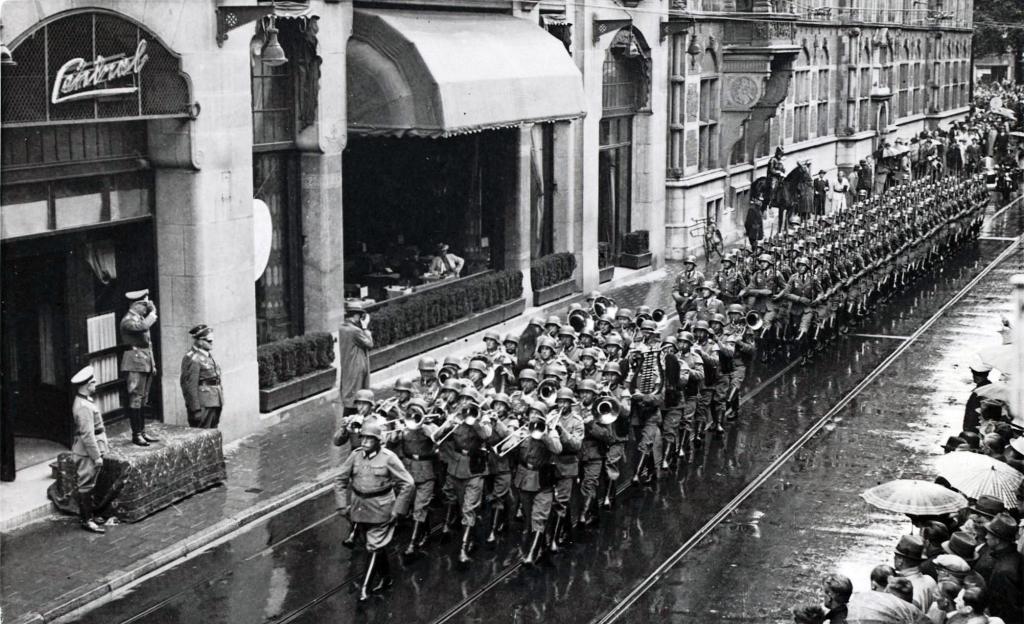
Just then, though, approaching the Guillotiere bridge, Jean caught sight of an unexpected sentry manning a machine gun—and on his head, a coal-scuttle helmet! So it had happened: the Germans were here! He’d predicted their arrival as soon as he’d heard about the Allied landing in North Africa—when was it?—just last Sunday. That had put Eisenhower’s troops within striking distance of France, so you didn’t have to be a military genius to guess that Hitler would rush in troops of his own. The southern coast of France had to be protected, no matter what arrangement he’d worked out with the Vichy government.
Jean exchanged a quick glance with Alain and the two of them stopped, hearing the rumble of heavy vehicles behind them. Turning, they watched in horror as a caravan of canvas-topped trucks flashed by them, followed moments later by a formation of goose-stepping troops. Marching past in a grayish-green blur, they seemed almost mechanical, a wind-up army whose hobnailed boots swung forward automatically, striking the pavement with such an ear-splitting cadence that the crowds on either side of the street stood there paralyzed. It was almost as if a wizard had waved his wand, immobilizing them.
Jean looked over at Alain—Stay calm—but he could feel tears stinging his own eyes. For two and a half years, the Germans had confined themselves to the upper two-thirds of the country, leaving Marshal Pétain to run what was left of it from his headquarters in Vichy. But now the Boches were grabbing what was left of France. Though Jean had foreseen it, it still came as a shock—a visceral shock, like a kick in the gut—to see Wehrmacht soldiers marching past no more than an arm’s length away, their faces clearly visible beneath the beetle-like brow of their helmets. Unwillingly, his eyes were drawn to a pimply boy with the shadow of a mustache on his upper lip. Not far from him was a thin-faced man with dark baggy eyes, and there, so close Jean could have clapped him on the shoulder, a pug-nosed lad with rosy cheeks and wire-rimmed glasses. It was unnerving, seeing the enemy this way, as individuals, that is—ordinary, commonplace, no different from anyone else—but how could it matter when they’d all sworn allegiance to Hitler?
When the last row of soldiers had filed past, Alain turned to Jean. “I need to go back to rue Sala, just to check . . .” he whispered, his face stiff and pale. “I may have left my codes out, or my revolver, or—”
Jean nodded. “Yes, go,” he said, waving him away. Alain was being ridiculous. It was unlikely that the Gestapo (who had surely slunk into town ahead of the troops) would be converging on Alain’s room in the middle of the day when they could have come at four in the morning to seize not just his codes, but him too. Still, Jean understood the boy’s panic.
The Vichy police had been a nuisance, but now, with the SD on the scene, their difficulties would be multiplied: the city clogged with checkpoints, rendezvous even riskier, voitures gonio trolling the streets in plain sight. Jean had seen these trucks in Paris. On the outside, they looked like delivery vans, but inside they carried equipment that could pick up even the faintest of radio signals.
Little by little, the crowd around Jean started to melt away. Women hurried off with their string bags to queue in whatever line looked promising. Workmen wearing coveralls scrambled back into manholes or quickly picked up their tools and disappeared. Teenagers, out on the streets during their lunch hour, scurried back to their lycées. But Jean continued to stand there. His day had started with a decoration from de Gaulle and seldom-seen pastries, but the delight of that moment had dissipated. Thinking it over, he wasn’t even sure what the decoration represented. He was a Companion of the Liberation, but so what? Would that make his job any easier?Would his rivals suddenly start taking orders from him? Would l’Armée secrète finally coalesce into a fighting force that might actually help, rather than hinder, the Allies? No, not likely.
For all he knew, the medal might not be an honor at all. Perhaps, in awarding it, de Gaulle was merely being strategic. He knew what Jean was up against, so perhaps he was merely trying to strengthen Jean’s hand, to give him a bit of extra leverage. But the chefs were a rowdy group. De Gaulle might have chosen Jean as his personal surrogate, his man on the ground, but did they care? No. Coordination was a dirty word as far as they were concerned. There were a few exceptions, of course—Lévy for instance—but Jean still spent the better part of his time embroiled in their squabbles, from the monarchist Frenay on the right to the haughty d’Astier de la Vigerie on the left, with God knows how many stops in between. Trying to bring these disparate groups together was like trying to conduct an orchestra when everyone was playing a different piece of music.
A sudden spattering of raindrops made Jean look up at the sky, which had turned an ominous shade of grayish-green. Yes, he thought, as the rain hit the brim of his hat, this is what I am in for, a long dull season of lowering skies and sodden feet.
He turned up the collar of his battered overcoat and plunged his hands deep into its pockets, wondering how far off spring was and whether or not he’d be alive to see it.
© Roberta Hartling Gates, all rights reserved
 Roberta Hartling Gates